Sequential Reward Chains in Mobile Gaming: Sustaining Engagement Through Deposit-Free Progressions
Written by Yara Krüger · Jul 28, 2026
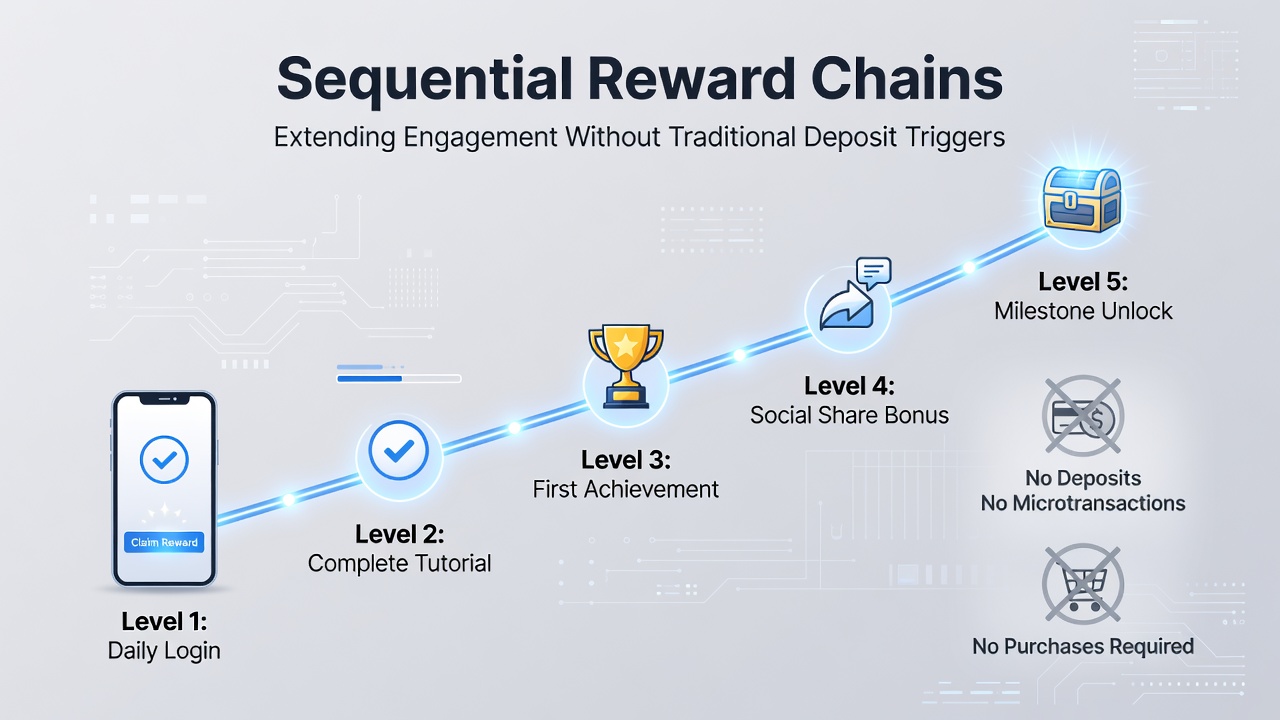
Sequential Reward Chains in Mobile Gaming: Sustaining Engagement Through Deposit-Free Progressions
Portable gaming applications have incorporated sequential reward chains that begin with no-deposit incentives and progress through multiple stages of play without requiring users to make initial deposits, according to industry reports from July 2026. These mechanisms operate by delivering starter rewards such as free spins or bonus credits that unlock additional tiers when specific in-game conditions are met, and developers design them to maintain user sessions across extended periods.
Mechanics Behind Deposit-Free Reward Sequences
Applications structure these chains so that an initial no-deposit trigger activates a series of tasks or spin thresholds, and completion of each stage automatically grants the next layer of rewards while the system tracks progress through backend algorithms. Researchers at mobile analytics firms note that this approach relies on predefined milestones rather than random events, and data from app performance metrics in mid-2026 showed average session extensions of 25 to 40 minutes when chains remained active. The process avoids traditional deposit prompts by embedding progression entirely within the free tier, and users advance by meeting play volume requirements or achieving set win multipliers that the software registers automatically.
One case involved a popular slots title where players received 10 starter spins upon installation, after which accumulating 50 spins triggered an additional 20 spins without any monetary input. Observers from gaming research groups documented similar patterns across dozens of titles, and figures revealed that retention rates climbed when the chain included at least three sequential stages.
Data Patterns in User Retention
Analytics platforms tracking portable gaming activity reported that reward chains without deposit requirements correlated with higher daily active user counts in several markets during the first half of 2026. A study compiled by the International Game Developers Association highlighted that apps employing these sequences recorded 18 percent longer average play windows compared to those relying solely on single-reward entries. The same report linked the effect to the psychological completion loop created when each stage feeds directly into the next, and metrics indicated reduced drop-off rates once users passed the second milestone.
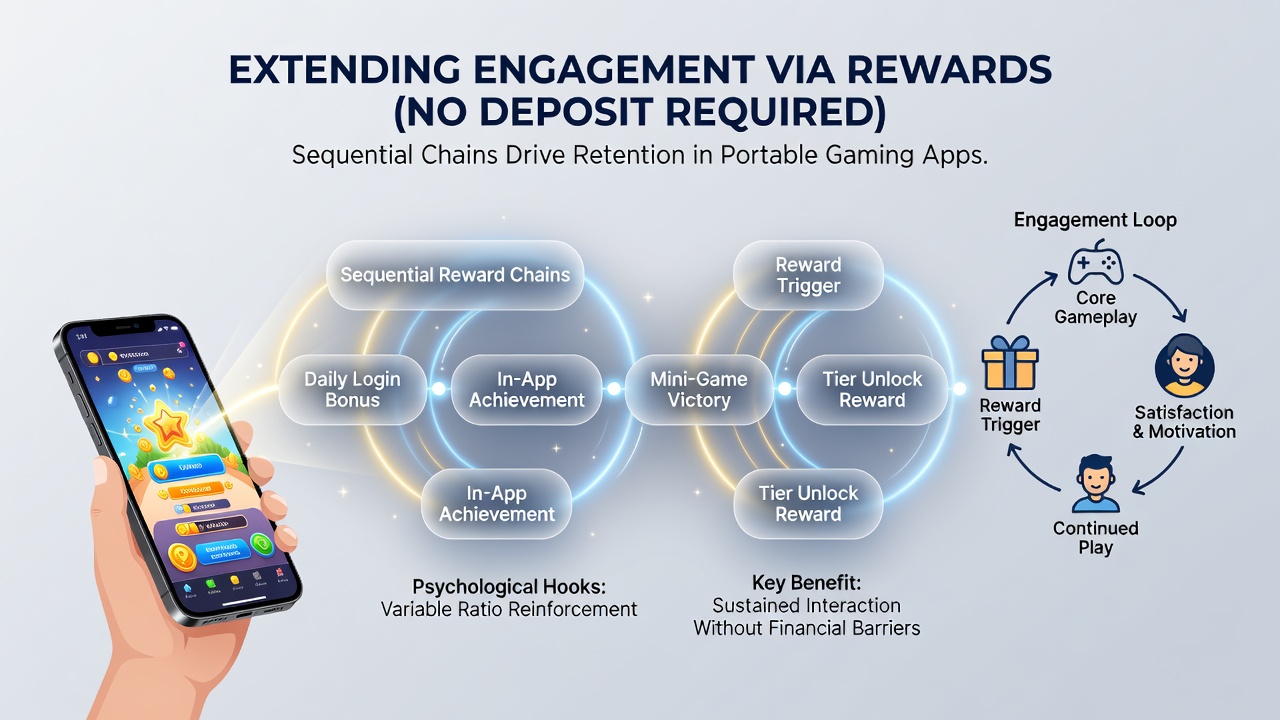
Yet the impact varies by region, whereas European markets showed stronger chain completion rates than North American ones according to aggregated telemetry. Canadian regulatory summaries from the same period noted parallel trends in licensed mobile offerings, and operators there adjusted chain lengths to align with local play preferences. What's interesting is that shorter chains of two to four stages produced steadier engagement than longer sequences, because users reached completion thresholds more reliably and returned for subsequent sessions.
Technical Implementation Across Platforms
Developers integrate these systems through server-side tracking that updates user profiles in real time, and the code registers each completed stage to dispense the following reward automatically. Portable apps often combine this with push notifications that alert users when a new tier becomes available, and testing data from July 2026 confirmed notification-driven returns increased by 12 percent in titles using the feature. The architecture prevents any requirement for deposits by isolating the reward pool to promotional balances that reset or refresh on a scheduled basis without user payment.
Experts examining code repositories adn update logs found that many sequences incorporate time-limited windows, such as 24-hour windows to complete a stage, which adds urgency without introducing financial barriers. This design choice appears in multiple high-traffic applications, and performance logs showed it helped sustain momentum across consecutive days rather than single sittings.
Comparative Performance Metrics
Industry reports compiled by the Asia Pacific Gaming Association compared apps with and without sequential chains, and results indicated that deposit-free progressions lifted weekly retention by measurable margins in markets including Australia and Singapore. The association's July 2026 dataset placed average session counts at 4.7 per week for chain-enabled titles versus 3.1 for standard free-play models. Those differences held after controlling for game genre and graphics quality, suggesting the reward structure itself contributed to the outcome.
Another analysis from academic researchers at the University of Nevada Reno gaming studies program examined user flow data and found that chains reduced early exits when the first two stages delivered modest but achievable rewards. The study documented that players who advanced past the initial milestone showed a 31 percent higher likelihood of returning within 48 hours.
Conclusion
Sequential reward chains in portable gaming applications function by linking no-deposit entry points to subsequent stages that extend play without financial triggers, and available metrics from July 2026 demonstrate consistent effects on session length and return rates across multiple regions. Operators continue to refine these structures through platform updates, while external analyses from groups such as the International Game Developers Association and the Asia Pacific Gaming Association provide ongoing visibility into their performance. The approach remains distinct from deposit-based systems because progression depends entirely on in-app activity thresholds that the software manages automatically.